THE WORKSHOP JOURNAL

Little by little.

2 min read

PMD Vita: French reaches further into the adventure.

  • PS Vita
  • Localization
  • Shared menu

Missions, mail, services and Pokémon categories: the latest private builds extend the translation and bring the Vita menu into line.

CHANGELOG

Versions & changes

Versions and identifiers for the work described; not a list of public releases.

  1. 0.46 / Port Menu v0.3.0

    A shared foundation

    Shared menu integration, preserving game-specific settings and backups. Rebuilding from local ROMs is documented.

  2. 0.47

    French mission rewards

    Ten reward messages corrected, covering points, money and Friend Areas. Formatting, accents and width checked in the tested cases.

  3. 25 October experiments

    Text and play comfort

    Mail, mission, service and category fixes. Experiments with Classic/Vita styles, opacity, pausing and button icons.

Validation so far

Targeted local and ARM tests. A complete translation and full campaign have not been validated on console.

Private builds · Console testing still needed

Since the 23 October notebook, work has focused on screens that remained partly in English. The 0.47 fix addresses mission reward dialogue. Work on 25 October goes further: mail, missions, services, objectives, locations and Pokémon categories.

The tricky part: finding an English phrase in the program does not prove it appears during play. Fixes therefore follow the references used by the screens. Targeted ARM checks verify text and categories; move names already displayed in French are preserved.

The menu shared with Minish Cap is moving forward too. Experimental builds offer Classic and Vita styles, adjustable opacity, a choice of pausing gameplay in the menu, and Vita or GBA button icons.

Next comes console testing: check rewards, maps, Pokémon summaries and saves during real play, then controls, menu closing and suspend/resume. Targeted tests certify neither a complete translation nor a completed campaign. These builds remain private, with no public download.
2 min read

Minish Cap Vita: a shared menu and a renderer to test.

  • PS Vita
  • Rendering
  • Performance
  • Shared menu

The native port of The Legend of Zelda: The Minish Cap joins the notebook: rebuilding from a local ROM, a shared menu and work on rendering.

CHANGELOG

Versions & changes

Versions and identifiers for the work described; not a list of public releases.

  1. 0.06 baseline

    Native rebuild

    Documented Vita baseline, with a complete rebuild from a local ROM, package integrity and shared-module tests checked.

  2. Port Menu v0.3.0

    Familiar controls across games

    A module shared by both ports. Experimental builds add Classic/Vita styles, opacity, pausing and button icons.

  3. exact-alpha-v1

    Optimizing without changing the image

    Experimental renderer identifier. An isolated replay preserves 666 identical sampled frames, along with audio and save bytes.

Validation so far

Computer comparisons and ARM execution. Vita FPS gains still need measuring; no constant 60 FPS guarantee.

Private builds · Vita measurements pending

This second project adapts The Minish Cap to PS Vita, building on EstebanPdN/zelda-tmc-3ds. A build procedure reconstructs the port from a compatible, locally supplied ROM using VitaSDK and libvita2d. The port sources remain private.

A menu shared by both ports avoids rebuilding the same settings for each game. Recent experiments cover Classic and Vita styles, tabs, opacity, pausing in the menu and button icons. Their usability and persistence still need checking on the console.

On rendering, an experimental build aims to speed up processing while keeping pixels identical. Synthetic tests and ARM execution on a computer found no differences; an isolated replay preserved 666 identical sampled frames, along with audio and save bytes.

That result does not measure Vita performance. The next step is to record frame rates on the console and inspect shadows, transparency, dialogue and transitions. No constant 60 FPS or complete playthrough is claimed. An unofficial fan project, with no public download for now.

1 min read

The workshop opens its doors.

  • Workshop notes
  • Prototypes
  • Web demos

Three projects, two playable demos and a place to share what comes next.

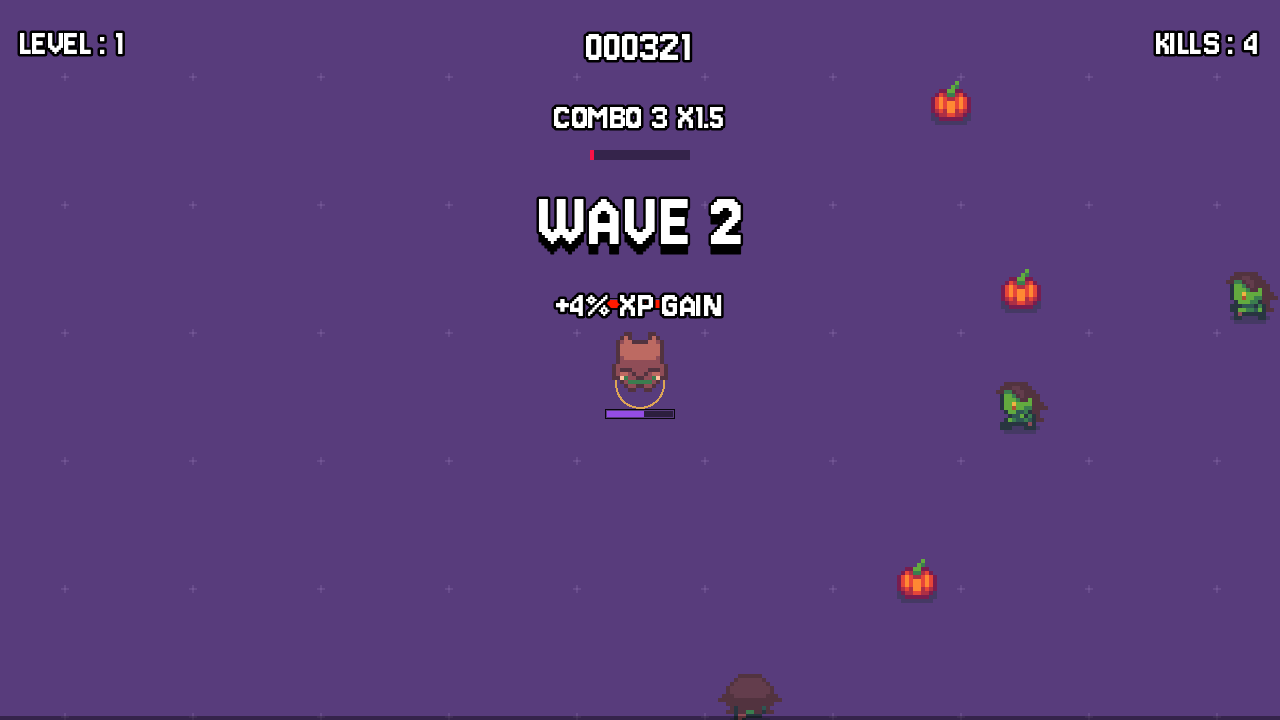
A game of RETRO HORDE

Today, BIP BOOP takes shape as a small public workshop. STONEVALE, RETRO HORDE and HAND LORD each have a place, with prototype screenshots and an introduction to their mechanics.

RETRO HORDE, the workshop’s most developed game, is now playable in a desktop browser. The demo’s best scores stay local. HAND LORD also offers card battles, with a start screen and instructions in French. Its save system lets you resume at the start of an encounter.

These games are still in development. The screenshots show work in progress: interfaces, visuals and balancing will evolve through testing.

This journal will share short updates: a mechanic taking shape, a problem solved or a new version to try. No schedule to announce yet, just a way to follow real progress.

Try RETRO HORDE